Lost in Translation: What Tourists Get Wrong About Bruges
Bruges isn’t just canals and chocolate—it’s a living city with rhythms you won’t find in guidebooks. I once wandered for hours, thinking I was embracing local culture, only to realize I’d been stuck in a tourist loop the whole time. Many travelers miss the real essence of Bruges by falling into subtle but avoidable traps. This isn’t about bad luck; it’s about perspective. Understanding the cultural heartbeat behind the postcard views transforms a simple visit into something deeper. Let’s uncover what most tourists overlook.
The Postcard Trap: Chasing Perfection Over Authenticity
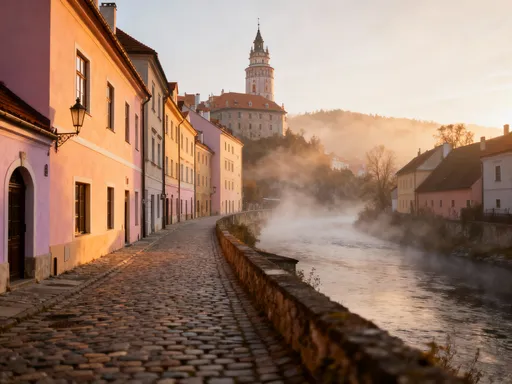
For many visitors, Bruges exists first in imagination—a place frozen in medieval charm, where cobblestone streets echo with silence and every canal bend offers a picture-perfect scene. This idealized vision, often shaped by social media and glossy travel brochures, sets the stage for disappointment or, worse, a visit that skims the surface without touching the soul of the city. The Markt square at noon, packed with tour groups and ringing with foreign languages, is not the Bruges locals know. It’s a stage set for tourism, not daily life. The danger of the postcard trap lies in prioritizing aesthetics over authenticity, seeking flawless photos instead of meaningful moments.
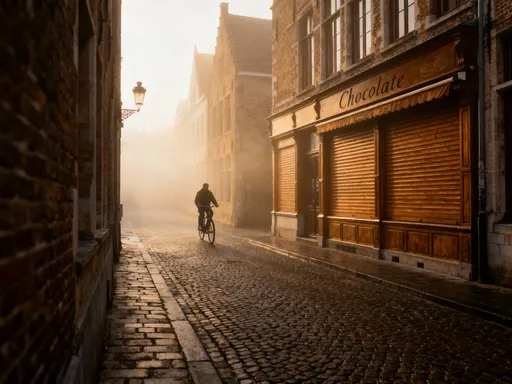
Yet just beyond the camera-laden hotspots, Bruges breathes normally. In neighborhoods like Sint-Michiels or Sint-Amandsberg, children bike to school, neighbors exchange greetings over garden fences, and bakeries open early with the scent of freshly baked bread. These are the rhythms of a functioning city, not a preserved diorama. Travelers who limit themselves to the central historic zone rarely witness this. They arrive at 10 a.m., follow the same path as thousands before them, and leave by dusk—never seeing Bruges when it belongs to itself. The shift from observer to participant begins with timing. Arriving before 8 a.m. or returning after 7 p.m. reveals a different world: empty squares, shopkeepers setting up displays, and the soft chime of church bells without the crowd’s chatter.
Authenticity isn’t hidden—it’s simply overlooked. A quiet walk through the residential lanes near the Minnewater Park offers more insight than any guided tour of the belfry. Here, laundry hangs from windows, cats nap on sunlit walls, and elderly residents sit on benches reading newspapers. These are not staged scenes; they are lived-in moments. The lesson is not to avoid iconic sights but to balance them with stillness and observation. Instead of rushing to capture the reflection of the Church of Our Lady in the canal, pause at a neighborhood café and watch how locals order their coffee—standing at the counter, exchanging quick pleasantries, then moving on. This is Bruges in motion, not in a frame.
Language Assumptions: The Silent Barrier in a Multilingual City
Belgium’s linguistic landscape is complex, and Bruges sits firmly in the Dutch-speaking region of Flanders. While most residents speak excellent English—especially those in hospitality—assuming that language alone is sufficient can create an invisible wall between visitor and community. A simple “Dank u” (thank you) or “Goedemorgen” (good morning) may seem minor, but these small efforts signal respect and openness. They shift the interaction from transactional to human. Locals often respond warmly, sometimes even switching to Dutch out of pride when they hear a visitor attempt their language.
The silence some tourists interpret as coldness is usually neither rude nor unwelcoming—it’s privacy. In a city where daily life unfolds at a measured pace, people are not always eager to engage with strangers, especially in non-tourist areas. But a basic greeting in Dutch can dissolve that reserve. One traveler shared how, after thanking a shopkeeper in Flemish for helping her find a rare bookbinding tool, she was invited to watch a demonstration in the back workshop—a moment of connection that never would have happened with English alone. These quiet exchanges are not about fluency; they’re about effort.
Moreover, relying solely on English can limit access to authentic experiences. Menus in neighborhood eateries may not be translated. Community events, like a local choir performance in a parish hall or a seasonal market in a school gym, often lack English signage. Those who make even a small attempt to understand the local language find doors opening—invitations to join, opportunities to learn. Language is not just communication; it’s inclusion. It tells people you are not just passing through, but trying to meet them where they are. In Bruges, where history and identity are deeply tied to Flemish culture, this gesture carries weight.
Travelers don’t need to become fluent overnight. A pocket phrasebook, a translation app used thoughtfully, or even miming with a smile can go far. The key is intention. When a vendor at the Sunday market sees you struggling to say “Hoeveel kost dit?” (How much does this cost?), they are more likely to respond with patience and warmth. These micro-moments build bridges. They transform a visit from consumption to connection. In a city that values tradition and quiet dignity, respect for language is one of the most powerful ways to show you’re not just another tourist.
Culinary Missteps: From Tourist Waffles to True Flemish Flavors
The smell of caramelized sugar and buttery waffles draws crowds along Katelijnestraat and the Markt, but these treats, while delicious, are designed for mass appeal. Often made with pre-mixed batter and served with whipped cream by the scoop, they represent a version of Belgian cuisine shaped by tourism, not tradition. Similarly, chocolate shops with golden logos and glass cases full of truffles cater to souvenir hunters, not local palates. True Flemish food is heartier, slower, and rooted in seasons and soil. It includes stoofvlees (beef stew slow-cooked in beer), waterzooi (a creamy chicken or fish stew from Flanders), and grey shrimp croquettes served with a squeeze of lemon at a corner café.
One of the most common culinary missteps is dining only at restaurants with English menus. These establishments often simplify dishes, reduce portion sizes, and inflate prices. In contrast, family-run taverns in Sint-Gillis or Dampoort serve generous plates of stoofvlees with fries and a local beer—exactly what residents eat. The experience is richer not just in flavor but in atmosphere. These places are not quiet; they are lively, filled with conversation, the clink of glasses, and the occasional burst of laughter. They are where Bruges gathers to eat, not perform.
Meal pacing also differs. Locals often take long lunches, especially on weekends, and dine later in the evening—sometimes not sitting down until 8:00 or 9:00 p.m. Rushing through a two-course meal in 45 minutes may feel efficient, but it misses the rhythm of Flemish dining culture. Sharing food, lingering over beer, and allowing conversation to unfold naturally are all part of the experience. A traveler who adapts to this pace often finds themselves welcomed into the flow of the evening, perhaps even sharing a table or receiving a complimentary taste of the chef’s special.
To eat like a local, go where the menus are in Dutch, where reservations are recommended, and where children are present. Visit the Friday farmers’ market near the Station, where vendors sell regional cheeses, fresh asparagus, and homemade charcuterie. Try a vol-au-vent—a pastry shell filled with chicken and mushrooms in cream sauce—served at a no-frills eatery in a side street. These are not exotic novelties; they are everyday comforts. By choosing them, travelers honor the cuisine not as spectacle but as sustenance, as heritage, as home.
The Timing Illusion: One-Day Visits vs. Slow Immersion
Over 80 percent of visitors to Bruges arrive on day trips from Brussels, Ghent, or even Paris, rushing through a checklist of sights in a single daylight span. They see the belfry, walk the canals, taste chocolate, and leave by evening. While efficient, this approach treats Bruges as a museum exhibit rather than a living city. The truth is, Bruges reveals itself gradually. Its magic is not in the landmarks themselves but in the spaces between them—the quiet courtyard of the Begijnhof at sunrise, the echo of an organ rehearsal in a side chapel, the way light falls on brick walls in the late afternoon when the crowds have thinned.
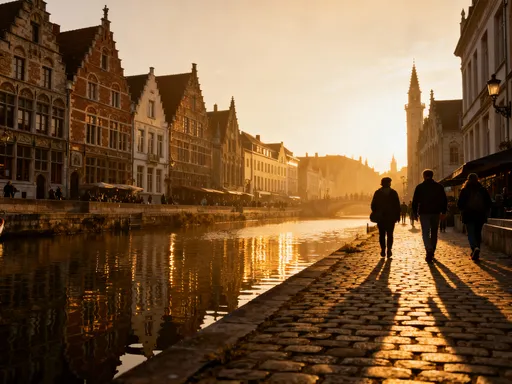
Staying overnight changes everything. The city transforms after dark. The daytime noise fades, replaced by the soft roll of bicycle tires on cobbles and the occasional burst of music from a pub. The canals, no longer crowded with boats, reflect the glow of streetlights like liquid gold. Walking through the deserted Markt at 9 p.m. feels like stepping into a 17th-century painting. These are not staged moments; they are gifts of presence. They belong to those who choose to stay, to wait, to watch.
Even a two-day visit allows for a more mindful rhythm. Begin with the Gruuthuse Museum in the morning, when it’s quiet, then wander through the residential streets of Sint-Michiels, where gardens bloom behind iron gates. Return to the Church of Our Lady in the late afternoon, when the light streams through the stained glass, illuminating the Michelangelo sculpture of Madonna and Child in a new way. Attend a concert at the Concertgebouw or a small recital at a neighborhood church—events rarely listed in tourist guides but deeply meaningful to locals.
Off-season travel offers even greater rewards. In November or February, Bruges is quiet, misty, and introspective. Hotel rates drop, reservations are easier, and shopkeepers have time to talk. The Christmas market, while popular, is more relaxed in the first two weeks of December than during peak weekends. A slow visit doesn’t require luxury or extravagance—it requires intention. It means allowing time to get lost, to sit on a bench with a book, to return to the same café two days in a row and be recognized. These are the moments that linger. They are not captured in photos but carried in memory.
Gift Shopping Gone Wrong: From Mass-Made Souvenirs to Local Craft
Chocolate, lace, and beer—these are the classic Bruges souvenirs, and for good reason. But where you buy them determines whether you take home a mass-produced memento or a piece of living culture. Along the main tourist routes, shops sell chocolate made elsewhere, packaged in Bruges. Lace is often imported from Asia, labeled as “authentic” without irony. Beer selections favor international brands over local brews. These purchases support global supply chains, not local artisans.
True craftsmanship thrives in smaller, less visible spaces. A third-generation chocolatier in Sint-Gillis, for example, still hand-pipes each truffle, using single-origin cocoa and seasonal flavors like blackcurrant or speculoos. Their shop has no neon sign, no English menu, but a line of locals every Saturday morning. Similarly, a lace restorer near the Holy Blood Basilica works with antique patterns, teaching apprentices the centuries-old technique of bobbin lace. These are not businesses designed for tourists—they are traditions preserved by dedication.
Buying from such places is not about spending more; it’s about valuing process. A handmade lace collar may cost more than a machine-made table runner, but it carries the weight of history, the touch of the maker. It tells a story. Supporting these artisans ensures that skills passed down through generations do not disappear. It also creates connection. Many shop owners are happy to explain their work, to show tools, to share family history. These conversations become part of the souvenir—a memory woven into the object.
To find authentic craft, look for small signage, handwritten labels, and cash-only policies. Visit the Wednesday craft market near the Begijnhof, where potters, weavers, and woodcarvers sell their work directly. Ask questions. “Is this made here?” “Who made it?” These simple inquiries signal respect and often lead to deeper exchanges. In a world of instant gratification, choosing slow, handmade goods is an act of mindfulness. It honors the maker, the material, and the moment.
The Canal Bias: Seeing Bruges Only from the Water
Canal cruises are among the most popular activities in Bruges, and for good reason—the city’s waterways are beautiful, winding through centuries-old architecture like liquid veins. Yet this perspective is inherently limited. From a boat, the city remains at a distance. You glide past facades without entering courtyards, hear snippets of conversation without joining them, see beauty without understanding its context. The canal view is curated, passive, and often crowded. It offers postcard imagery but little insight into how Bruges lives.
The real texture of the city is found on foot or by bicycle. Walking through the back alleys of Sint-Pieters, you discover hidden courtyards, community gardens, and small chapels tucked between homes. You notice how windows are painted in soft blues and greens, how flower boxes overflow with geraniums, how cats patrol quiet lanes. These details are invisible from the water. They require time, attention, and movement at human scale.
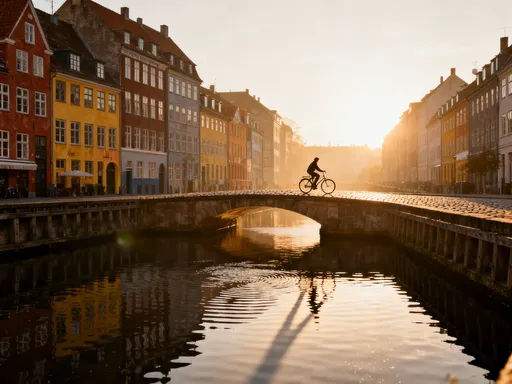
Biking, in particular, offers a rhythm that matches the city’s pulse. Residents use bicycles as daily transport, not recreation. Joining them—renting a sturdy bike, following local routes, stopping at a neighborhood bakery—immerses you in their world. You move with the flow, not outside it. You experience the slight incline of a bridge, the crunch of gravel in a park, the breeze off a quiet canal no tour boat reaches.
There is no need to reject canal cruises entirely. They can be a useful introduction, especially for those with mobility challenges. But they should be a beginning, not an end. Pair a morning boat ride with an afternoon walk through the Dampoort district, where old guild houses line tree-shaded streets. Compare what you saw from the water with what you discover on land. Notice how buildings have back entrances used by residents, how delivery bikes dart through alleys, how children play in hidden squares. These are the layers beneath the surface. They remind us that cities are not just seen—they are lived.
Reimagining the Visit: Building a Culturally Conscious Itinerary
The goal is not to reject tourism but to transform it—into something more respectful, more reciprocal, more real. Bruges does not need to be “discovered” by every traveler; it needs to be met with openness and care. A culturally conscious visit balances must-see landmarks with quiet observation, popular experiences with local rhythms. It values connection over collection, presence over performance.
Consider a two-day itinerary that reflects this balance. On day one, arrive early. Visit the Friday farmers’ market, then explore the Gruuthuse Museum at opening time. Walk through the Begijnhof in the morning light. Have lunch at a family-run café in Sint-Michiels, ordering from the Dutch menu. In the afternoon, rent a bike and ride through the residential west side of the city. End the evening at a neighborhood pub, trying a local beer like Straffe Hendrik or Blanche de Bruges.
On day two, attend a morning service or concert at the Church of Our Lady, then visit a small chocolate atelier or lace studio. Have a late lunch at a traditional tavern, savoring stoofvlees with fries. Spend the afternoon in the Concertgebouw gardens or at the Simon Stevinplein, watching daily life unfold. If possible, stay into the evening, walking the canals when they are calm, seeing the city under lamplight.
This kind of visit does not require special skills or resources. It requires curiosity, patience, and a willingness to step off the main path. It means accepting that not every moment will be picturesque—and that some of the best ones won’t be. A shared smile with a shopkeeper, a wrong turn that leads to a hidden garden, a conversation over a beer—these are the true souvenirs of travel.
Bruges is not a frozen relic. It is a city of stone and water, yes, but also of people and stories. It does not exist to be photographed. It exists to be lived. When we slow down, listen, and engage with care, we don’t just see Bruges—we meet it. And in that meeting, we carry home not just memories, but meaning.