You Won’t Believe These Auckland Cityscape Mistakes Everyone Makes
Auckland’s skyline blends ocean, volcanoes, and modern architecture in a way that feels almost too perfect. But behind the postcard views, travelers often make the same missteps—chasing famous spots while missing the soul of the city. I’ve seen it firsthand: the overcrowded lookouts, the ignored local neighborhoods, the wasted hours. This isn’t just about sightseeing; it’s about seeing Auckland *right*. Let’s rethink how we experience its urban landscape.
The Sky Tower Trap: Why Everyone’s First Stop Might Be a Mistake
The Sky Tower stands as Auckland’s most iconic structure, rising 328 meters above the city like a sentinel of steel and glass. For many visitors, it's the first destination upon arrival—a symbol of arrival, a promise of sweeping views. Yet, the reality often falls short of expectation. Long queues, timed entry tickets, and the constant hum of tour groups can turn what should be a breathtaking moment into a hurried, impersonal experience. While the panoramic vista from the observation deck is undeniably impressive, offering a bird’s-eye view of the Hauraki Gulf and the volcanic field beneath, it presents a sanitized version of the city—one stripped of texture, sound, and soul.
What many don’t realize is that the Sky Tower’s dominance in itineraries often comes at the expense of deeper engagement. By prioritizing elevation over immersion, travelers risk missing the rhythm of daily life—the morning coffee ritual at a corner café, the busker playing Māori flute near Karangahape Road, the quiet moment when sunlight hits the brick facades of heritage buildings. These are the details that shape a city’s character, and they unfold at ground level. The tower is not inherently flawed; it’s the mindset of “checklist tourism” that distorts its value.
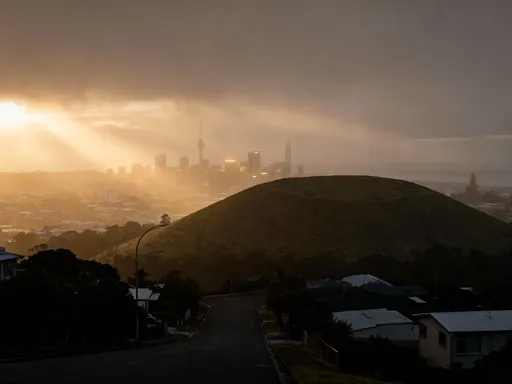
So how can one experience the Sky Tower without falling into the trap? Timing is key. Visiting early in the morning, just after opening, or later in the evening when the city lights begin to shimmer, can dramatically reduce crowds and enhance the atmosphere. Alternatively, consider viewing the tower from a distance—perhaps from Mechanics Bay or One Tree Hill—where its presence becomes part of a broader cityscape rather than the sole focus. This shift in perspective allows for a more balanced understanding of Auckland: not as a single landmark to conquer, but as a living, layered environment to explore.
Overlooking the Volcanic Hills: More Than Just Hills, They’re History
Beneath Auckland’s modern skyline lies a geological wonder: a volcanic field composed of more than 50 dormant cones, each a silent witness to millennia of natural and cultural transformation. These hills—Mount Eden, One Tree Hill, Mount Victoria, and others—are not just scenic overlooks; they are sacred landscapes imbued with Māori history and ancestral significance. Yet, too often, they are treated as mere photo opportunities, rushed through between meals or shopping stops. This superficial engagement overlooks the depth these sites offer, both visually and spiritually.
Take Maungawhau (Mount Eden), for example. At 196 meters, it offers one of the clearest 360-degree views of the city, stretching from the Waitematā Harbour to the Manukau Harbour. But beyond the vista lies a rich narrative. This was once a pā (fortified village), home to a thriving Māori community with terraced gardens, water reservoirs, and defensive trenches. The crater itself was a place of cultivation and gathering. Today, visitors walk along the rim, often unaware of the cultural weight beneath their feet. Respecting tapu (sacred restrictions) means staying on marked paths and refraining from removing stones or plants—a small act that honors the site’s enduring significance.
One Tree Hill (Maungakiekie) tells a similar story. Despite its name, the solitary tree is gone, but the hill remains a powerful symbol of connection to the land. It was once covered in dense forest and served as a major settlement site. Now, it’s part of a large park where locals jog, families picnic, and cyclists wind through native bush. To visit like a local, come on a weekday morning, park thoughtfully (residential streets have strict signage), and take time to read the interpretive panels that explain the dual heritage of the area—both Māori and colonial.
For those seeking quieter alternatives, consider Ōhinerau (Mount Hobson) or Te Tātua a Riukiuta (Big King), lesser-known cones that offer equally stunning views without the foot traffic. These sites remind us that Auckland’s cityscape is not just built—it’s grown, shaped by fire, time, and human stewardship. By approaching these hills with curiosity and respect, travelers gain not just a view, but a deeper understanding of the city’s foundations.
The Waterfront Illusion: Pretty But Overrated?
The Auckland waterfront—particularly the Viaduct Harbour and Wynyard Quarter—is undeniably photogenic. Gleaming yachts bob beside designer restaurants, palm trees sway in the sea breeze, and the Sky Tower reflects in the calm harbor waters. It’s a postcard-perfect scene, carefully curated and widely shared. But this polished aesthetic can create a misleading impression of the city’s relationship with the sea. What’s often missing is the grit, the working waterfront, the docks where cargo ships unload and fishing boats return with the day’s catch.
To see the authentic maritime character of Auckland, one must look beyond the tourist hubs. Head to Westhaven Marina, the largest in the Southern Hemisphere, where hundreds of private vessels are moored. Here, the air smells of salt and diesel, and the docks hum with activity—sailors repairing rigging, families loading provisions, dogs barking from deck to deck. It’s unglamorous but alive, a true reflection of a city defined by water.
Another revealing spot is the Silo Park area, part of the redeveloped Wynyard Quarter but with a more industrial edge. On weekends, the Farmers Market draws locals with fresh produce, artisan bread, and Pacific-inspired street food. Children play near the repurposed silos, and the old concrete structures stand as monuments to the city’s working past. From here, a walk along the light rail path leads to the Ports of Auckland, where container cranes operate day and night, connecting New Zealand to global trade routes.
For a more serene experience, the coastal walk from Mission Bay to St Heliers offers a different waterfront perspective. Families fly kites on the grassy slopes, couples stroll along the promenade, and swimmers brave the chilly waters of the Pacific. These neighborhoods feel residential, lived-in, and far removed from the commercial sheen of the central marinas. The lesson is clear: Auckland’s waterfront is not a single entity but a mosaic of experiences. By venturing beyond the glossy surface, travelers discover a city shaped not just by beauty, but by function, history, and community.
Suburbia Secrets: Where the Real Cityscape Lives
If downtown Auckland is the city’s showface, its suburbs are its heartbeat. Neighborhoods like Ponsonby, Devonport, Parnell, and Newmarket each possess a distinct personality, shaped by architecture, culture, and local traditions. These areas reveal a side of Auckland that no skyline photo can capture—the way morning light filters through Victorian verandas, the sound of Pacific languages in a weekend market, the scent of baking bread from a family-run bakery.
Ponsonby, for instance, is a blend of old and new. Once a working-class district, it has evolved into a hub of creativity and diversity. Tree-lined streets are lined with restored villas, boutique stores, and cafés where locals linger over flat whites. But amid the gentrification, community spirit remains strong. The Ponsonby Farmers Market, held every Saturday, draws vendors from across the region, offering organic vegetables, handmade cheeses, and Pacific-style dumplings. It’s a place to slow down, to chat with growers, to taste the region’s bounty.
Devonport, accessible by a 12-minute ferry from downtown, feels like a village frozen in time. Nestled on the northern shore of the Waitematā Harbour, it boasts Edwardian architecture, a historic naval base, and views of Rangitoto Island. Children play in the park while parents read newspapers at outdoor tables. The North Head walking trails offer panoramic views and a glimpse into Auckland’s military past, with tunnels and gun emplacements carved into the volcanic rock. Here, the cityscape is intimate, human-scaled, and deeply rooted in place.
Parnell, one of Auckland’s oldest suburbs, offers a more refined charm. Tree-shaded avenues lead to heritage churches, art galleries, and the serene Parnell Rose Garden. The village center buzzes with independent bookshops and tea houses, many housed in restored 19th-century buildings. On Sundays, the Parnell Market attracts crowds with vintage clothing, handmade crafts, and live music. It’s a reminder that Auckland’s character isn’t confined to high-rises—it thrives in quiet streets and community spaces.
Exploring these neighborhoods doesn’t require a car. The city’s bus network, while sometimes confusing to newcomers, connects most major suburbs with reasonable frequency. Ferries, in particular, offer a scenic and stress-free way to travel, allowing passengers to watch the skyline recede and reappear from different angles. By stepping into suburbia, travelers shift from observer to participant, experiencing Auckland not as a destination, but as a lived reality.
Light & Timing: How the Day Shapes the City’s Face
Auckland is a city of light and shadow, and the quality of daylight transforms its appearance from hour to hour. Many visitors snap photos in the harsh midday sun, only to find their images flat and lifeless. The truth is, the city reveals its most photogenic self during the golden hours—shortly after sunrise and before sunset—when the light softens, colors deepen, and reflections dance across the harbor.
Dawn in Auckland is a quiet, almost sacred time. At Mission Bay, the first rays of sun strike the water, turning it into liquid gold. The café shutters are still closed, the playground empty, and the only sounds are waves lapping the shore and the distant cry of seagulls. A morning walk along the coastal path offers unobstructed views of Rangitoto, its symmetrical cone glowing in the low light. Similarly, at Bastion Point, the skyline appears crisp and ethereal, framed by native flax and pōhutukawa trees.
Evening brings a different magic. As the sun dips behind the Waitākere Ranges, the city begins to illuminate—not in a blaze of neon, but in a gentle, scattered glow. The Sky Tower lights up in rotating colors, ferry terminals flicker with activity, and the bridges strung across the harbor shimmer like silver threads. One of the best vantage points is St Mary’s Bay, just west of the city center, where the low angle of the light highlights the texture of buildings and the movement of boats.
For those interested in photography, a tripod and wide-angle lens can make a significant difference, especially during twilight when exposures lengthen. But even without equipment, simply being present at the right time enhances the experience. Midday, by contrast, is best reserved for indoor activities—museums, galleries, or café breaks—while the city bakes under a bright, unforgiving sun.
Seasonal changes also affect the cityscape. In winter, the sun sets earlier and lower, casting long shadows and amplifying architectural details. In summer, daylight stretches into the evening, allowing for long strolls and open-air dining. Understanding these rhythms allows travelers to plan not just *what* to see, but *when* to see it—turning fleeting moments into lasting impressions.
Transport Traps: Getting Around Without Losing the View
Many visitors assume that to see Auckland efficiently, they need a rental car. While having a vehicle offers flexibility, it often comes at a cost—traffic congestion, expensive parking, and the stress of navigating one-way systems. More importantly, it disconnects travelers from the city’s textures: the rhythm of public life, the chance encounters, the unexpected views glimpsed from a bus window.
Auckland’s public transport system, though still evolving, provides viable and scenic alternatives. The ferry network is among the most underrated assets. Routes from Downtown Ferry Terminal to Devonport, Waiheke Island, or Half Moon Bay offer front-row seats to the harbor, with unobstructed views of islands, yachts, and the city skyline. The 20-minute ride to Devonport, for example, costs less than $10 and deposits travelers in a charming village with historic sites and walking trails.
The bus system, particularly the frequent services along major corridors like Dominion Road and New North Road, connects suburbs with the city center. While not always fast, it allows passengers to observe daily life—students heading to school, workers commuting, elders shopping at local markets. For the adventurous, combining bus and walking routes can lead to hidden gems: a quiet park, a community garden, a mural tucked behind a supermarket.
Cycling is another excellent option, especially along the Northwestern Cycleway or the coastal paths in the east. Bike rentals are available in the city, and dedicated lanes make riding safer than in many other urban centers. Walking, too, should not be underestimated. The downtown core is compact enough to explore on foot, and pedestrian-friendly zones like Britomart and Commercial Bay encourage slow, immersive travel.
The key is planning. Using the AT Mobile app (Auckland Transport), travelers can check real-time schedules, plan routes, and even purchase tickets. Avoiding peak hours—7–9 a.m. and 4–6 p.m.—reduces stress and crowding. By embracing public and active transport, visitors don’t just save money and reduce their carbon footprint—they gain a richer, more authentic experience of the cityscape in motion.
Looking Beyond the Postcard: A Mindset Shift for Urban Exploration
The greatest mistake travelers make in Auckland is not missing a specific landmark, but approaching the city with the wrong expectation. Too often, urban exploration becomes a checklist: Sky Tower, waterfront, volcano, done. This mindset treats the city as a performance—something to consume quickly and move on from. But Auckland resists such simplification. Its beauty is not in grand gestures, but in quiet details: the way Māori place names echo in street signs, the fusion of Pacific and European architecture, the way green spaces weave through concrete like veins.
To truly know Auckland, one must adopt a slower, more curious approach. This means allowing time for aimless wandering, for conversations with locals, for sitting on a bench and simply watching the world go by. It means noticing the pōhutukawa trees clinging to volcanic rock, the hand-painted signs at a weekend market, the laughter spilling from a suburban café. These moments don’t fit neatly into photo albums, but they form the emotional core of travel.
It also means recognizing that Auckland is a city of layers. The modern skyline coexists with ancient geological formations. The bustling port operates beside tranquil reserves. The influence of Māori and Pasifika cultures is visible in art, language, and food, enriching the urban fabric in ways that go beyond tourism brochures. To appreciate this complexity is to move beyond sightseeing and into understanding.
Ultimately, the cityscape is not a static image, but a living, breathing entity. It changes with the light, the season, the tide, and the people who inhabit it. By letting go of the need to capture everything, and instead focusing on connecting with what’s real, travelers don’t just visit Auckland—they begin to feel at home in it.
Auckland’s cityscape isn’t just something to see—it’s something to feel, understand, and experience in motion. By avoiding common traps and embracing its complexities, you don’t just visit the city. You begin to know it.