You Won’t Believe What I Found in Cesky Krumlov’s Old Town
Walking through Cesky Krumlov felt like stepping into a storybook no one told me about. The cobblestone lanes, the river curling around the castle like a ribbon—everything was so alive. I came for the views, but stayed for the urban magic hiding in plain sight. This isn’t just a pretty town; it’s a carefully woven space where history and daily life blend perfectly. If you’ve ever wanted to feel both lost and completely at home, this place delivers. There’s a quiet rhythm here, a balance between preservation and practicality, that few destinations manage so effortlessly. It’s not about grand gestures but subtle details—the curve of a bridge, the angle of sunlight on a tiled roof, the way laughter echoes off centuries-old walls. In a world of overdeveloped tourist spots, Cesky Krumlov stands apart, not because it’s untouched, but because it’s thoughtfully lived-in.
First Impressions: The Moment the Town Came Alive
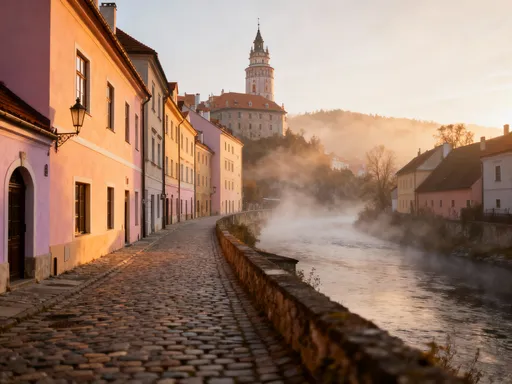
Arriving in Cesky Krumlov by regional bus from Prague, there’s no dramatic fanfare—just a gentle roll into a quiet roadside stop on the edge of town. The first real sight of the town unfolds gradually. As you walk up the slight incline from the station, the Vltava River appears, winding through a valley cupped by hills. Then, rising above the treetops, the castle complex emerges—its baroque tower and red rooftops peaking over the treetops like a crown. This slow reveal is intentional, not by design plan, but by geography, and it sets the tone for everything that follows. Unlike cities that overwhelm with scale, Cesky Krumlov unfolds in layers, inviting curiosity rather than awe.
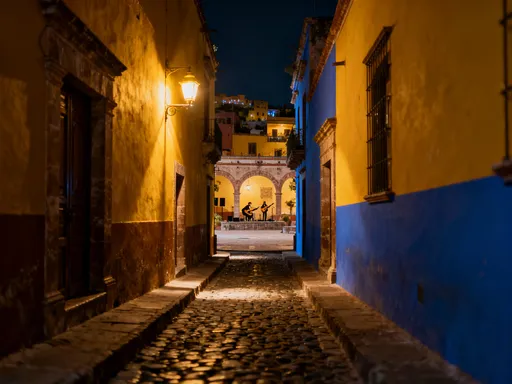
The entrance to the old town is marked not by a gate or sign, but by a shift in texture—smooth asphalt gives way to uneven cobblestones, and the air changes, carrying the faint scent of woodsmoke and baked bread. The streets narrow quickly, just wide enough for two people to walk side by side, with overhanging eaves and flower boxes spilling geraniums and petunias. What’s remarkable is how this density doesn’t feel claustrophobic. Instead, the urban layout channels movement naturally, guiding visitors toward key landmarks without signs or barriers. The town’s UNESCO World Heritage status, awarded in 1992, recognizes not just its architecture but its organic cohesion—a rare example of medieval urban planning that still functions in the 21st century.
This sense of flow is rooted in centuries of adaptation. The town grew along trade routes, its layout shaped by the river’s curve and the need for defensible elevation. Yet today, it doesn’t feel like a relic. Shops, cafes, and homes operate side by side, and the sound of daily life—children laughing, a shopkeeper sweeping the step, a distant accordion melody—fills the alleys. Unlike some historic towns that feel curated for tourism, Cesky Krumlov maintains a quiet authenticity. The absence of chain stores, billboards, or loud music preserves its character. Even during peak season, the town absorbs crowds without losing its soul, a testament to its thoughtful scale and human-centered design.
The Heart of the Urban Maze: Latrán District and Its Hidden Corners
Just below the castle walls lies Latrán, a historic neighborhood that once housed castle servants and artisans. Today, it remains one of the most intimate and livable parts of Cesky Krumlov. The houses here are smaller than those in the main square, painted in soft ochres, blues, and pinks, with wooden shutters and slate roofs. Stone staircases connect uneven levels, and narrow passageways open unexpectedly into small courtyards where laundry flutters in the breeze and cats nap on sun-warmed steps. This is not a postcard view—it’s real life, quietly unfolding.
Latrán’s charm lies in its modesty. The architecture is functional, not flamboyant, yet every detail contributes to a sense of warmth and continuity. Doorways are slightly arched, windows are irregularly placed, and roofs slope at different angles, creating a patchwork effect that feels both random and harmonious. These homes were built over centuries, each addition responding to the terrain and the needs of the time. Today, many serve as family-run guesthouses or small workshops, preserving a tradition of craftsmanship. A ceramicist shapes mugs in a ground-floor studio, a bookbinder repairs antique volumes behind a quiet door, and a baker pulls fresh loaves from a wood-fired oven each morning. These working spaces are not hidden away—they’re part of the streetscape, reinforcing the idea that the town is not a museum but a living community.
What makes Latrán truly special is its role in shaping daily life. Because the streets are narrow and interconnected, neighbors interact frequently. A woman watering her flowers exchanges greetings with a passing tourist; a man carrying groceries pauses to chat with a neighbor. There’s a subtle network of familiarity that sustains the neighborhood’s character. Public benches tucked into corners, small fountains, and shaded alcoves encourage pause and conversation. These micro-spaces, often overlooked in urban planning, are essential to the town’s social fabric. They prove that intimacy in city design isn’t about size, but about the quality of connection—between people, between buildings, and between past and present.
River as Urban Connector: Life Along the Vltava
The Vltava River doesn’t just pass through Cesky Krumlov—it embraces it. The river’s gentle curve wraps around the old town, creating a natural boundary that shapes movement and perspective. Bridges span the water at key intervals, linking the castle side with the lower town and beyond. These crossings are more than functional; they’re designed for lingering. Stone railings are low enough to lean on, and small platforms extend outward, offering framed views of the castle or the water below. In the summer, locals and visitors alike gather here to watch kayakers glide by or to simply sit and listen to the river’s quiet rush.
The riverbanks are carefully maintained but not over-engineered. Natural stone edges blend with gravel paths, and wooden benches are placed at intervals where the view opens up. There are no fences or barriers, allowing easy access to the water’s edge. Children splash in shallow areas, dogs cool off after a walk, and photographers set up tripods at golden hour. This accessibility is rare in historic towns, where preservation often leads to over-protection. In Cesky Krumlov, the river remains a shared resource, not a display piece. Kayaking is a popular activity, and rental stations operate seasonally, offering a unique perspective of the town from the water. Paddling slowly along the curve, you see the castle from below, its stone foundations rising directly from the bank—a sight impossible from land.
What’s most striking is how the river integrates into daily routines. Morning joggers follow the path along the east bank, their footsteps echoing softly on the packed gravel. Fishermen cast lines from quiet spots, their rods propped on wooden stands. In the evenings, couples walk hand in hand, pausing to watch the light fade over the hills. The Vltava isn’t just scenic—it’s functional, serving as a natural spine that connects neighborhoods, encourages movement, and supports leisure. Urban planners often speak of ‘green corridors,’ but here, the concept is embodied in water. The river slows the pace of life, inviting people to move with its rhythm rather than against it. It’s a reminder that the best urban spaces don’t dominate nature—they work with it.
Public Spaces That Breathe: Squares, Gardens, and Local Hangouts
Svornosti Square, the main public space in Cesky Krumlov, is deceptively simple. It’s not large—perhaps 60 meters across—and lacks the grandeur of Prague’s Old Town Square. But its modest size is part of its strength. Surrounded by pastel buildings with baroque gables and ground-floor cafes, the square functions as a true community hub. At midday, tables fill with tourists sipping coffee, but by early evening, locals take over. Families gather for ice cream, friends meet for drinks, and an elderly man plays chess with a stranger under the shade of a chestnut tree. The seating is varied—wooden benches, café chairs, even steps that double as informal perches—allowing people to choose how they engage with the space.
Equally important is Eggenberg Garden, a quiet retreat tucked behind the castle. Unlike formal gardens with rigid symmetry, this space feels relaxed and inviting. Gravel paths meander through flowerbeds and old trees, and wooden benches face the river or offer framed views of the town. In spring, tulips bloom in clusters; in autumn, fallen leaves carpet the ground in gold and rust. The garden is used differently throughout the day—parents push strollers in the morning, students read under trees in the afternoon, and couples stroll at sunset. Its seasonal shifts reflect a deeper truth: great public spaces are not static. They change with the light, the weather, and the rhythm of life.
What sets these spaces apart is their usability. They’re not designed for spectacle but for presence. Shade is abundant, surfaces are slip-resistant, and sightlines are open, making them accessible to people of all ages. There are no loudspeakers, no commercial events dominating the area, and no permanent structures that block movement. This restraint is deliberate. The town’s planners understand that over-programming can kill spontaneity. Instead, they create conditions for connection—comfortable seating, visual interest, and a sense of safety—then let people decide how to use the space. The result is a quiet vibrancy, a hum of activity that feels natural rather than forced. In an age of over-designed plazas, Cesky Krumlov reminds us that the best urban spaces are those that breathe.
Walking as Design: Why the Pedestrian-Only Core Works So Well
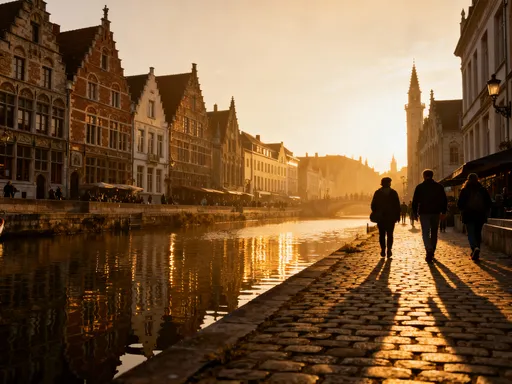
The entire historic center of Cesky Krumlov is closed to motor vehicles, a decision that transforms the experience of being in the town. Without the constant hum of engines, the soundscape shifts dramatically. Footsteps on cobblestones, the rustle of leaves, and distant conversations become the background music. This quietness isn’t just pleasant—it’s essential to the town’s character. It allows for intimacy, for conversation, for the kind of slow observation that tourism often overlooks.
The pedestrian-only policy isn’t just symbolic; it’s deeply functional. Emergency vehicles and service deliveries are permitted during restricted hours, but for most of the day, the streets belong to people. This creates a safe environment for children to play, for elders to walk without fear, and for visitors to move freely without navigating traffic. The surface materials—irregular stone, worn brick, and compacted gravel—vary underfoot, adding texture and slowing movement. This isn’t a flaw; it’s a feature. Unlike smooth, uniform sidewalks that encourage rushing, these surfaces invite attention, making people more aware of their surroundings.
Wayfinding is intuitive. There are few signs, yet the layout naturally guides people toward key areas. The main street slopes gently upward toward the castle, while side alleys branch off like capillaries. Lighting is subtle—low-level lampposts with warm-toned bulbs that illuminate without glare. Even the rhythm of movement feels different. People walk at a slower pace, pause more often, and interact more freely. Compare this to other European towns where narrow streets are clogged with scooters or delivery vans, and the difference becomes clear. Cesky Krumlov prioritizes human scale over convenience, proving that urban comfort isn’t about speed but about presence. In doing so, it offers a quiet rebellion against the noise and haste of modern life.
Living History: How Restoration Respects Urban Flow
Preservation in Cesky Krumlov is not about freezing the town in time. Instead, it’s a continuous process of careful restoration that respects both historical integrity and modern needs. Facades are repaired using traditional materials—lime plaster, hand-cut stone, and reclaimed wood—ensuring that new work blends seamlessly with the old. Roofs are retiled with local clay, and window frames are repainted in historically accurate colors. These efforts are guided by UNESCO guidelines, but also by community input. Residents are consulted on major changes, and local craftsmen are often hired, keeping skills alive and ensuring authenticity.
What’s remarkable is how this preservation coexists with everyday life. Construction zones are neatly screened, work hours are limited to avoid disruption, and scaffolding is minimized. Unlike some historic towns that feel like construction sites, Cesky Krumlov manages maintenance without losing its rhythm. Infrastructure upgrades—such as updated drainage, electrical lines, and internet access—are buried underground, preserving the visual landscape. Even new buildings in the surrounding areas follow strict design codes, ensuring that modern development doesn’t clash with the historic core.
This balance between old and new is the essence of sustainable urbanism. The town doesn’t reject change; it absorbs it thoughtfully. A converted stable becomes a small museum, a former workshop turns into a café, and a historic cellar hosts live music. These adaptive reuses keep the town dynamic without erasing its past. The result is a living heritage—one that honors history not through display, but through use. It’s a model other towns could learn from: preservation not as perfection, but as continuity.
Beyond the Postcard: Finding Daily Rhythm in a Tourist Town
Tourism is undeniably a part of life in Cesky Krumlov. On summer afternoons, the main streets buzz with visitors, and guided groups move in clusters through the alleys. Yet, by early morning and late evening, the town reclaims its rhythm. At 6:00 a.m., the baker opens her shop, the postman begins his route, and an old man walks his dog along the riverbank. These moments reveal the town’s true character—not as a destination, but as a home.
Locals still shop at the small grocery near Latrán, their reusable bags in hand. Children ride bikes through the quiet streets, their laughter echoing off stone walls. On weekends, families gather in Eggenberg Garden for picnics, spreading blankets under the trees. These routines persist alongside tourism, not in spite of it. The key is balance. Visitor numbers are managed through parking restrictions and seasonal awareness campaigns, preventing overcrowding. Accommodations are mostly small-scale—family guesthouses, not large hotels—limiting the influx of mass tourism.
This duality is what gives Cesky Krumlov its lasting charm. It welcomes travelers without becoming one. The urban space serves residents first, visitors second—a principle that shapes everything from noise regulations to waste collection schedules. When a space is designed for those who live there, it naturally becomes more inviting for those passing through. The authenticity isn’t staged; it’s inherent. And that’s the quiet lesson of this town: lasting beauty comes not from perfection, but from priority. When people come first, the magic follows.
Cesky Krumlov proves that great urban spaces aren’t built for photos—they’re built for people. Its magic lies not in perfection, but in thoughtful, human-scaled design that invites slow exploration. Every cobblestone, every bench, every bend in the river serves a purpose beyond aesthetics. They create conditions for connection, for quiet moments, for the kind of unplanned encounters that make travel meaningful. In a world where many destinations are optimized for efficiency or spectacle, this town stands as a quiet alternative—a place where time moves differently, where history is lived, not displayed. For travelers seeking depth over checklist tourism, Cesky Krumlov offers a masterclass in place-making. Visit not just to see, but to feel how space shapes experience. Let the town surprise you, not with grand monuments, but with the quiet details that make a place truly unforgettable.